Neueste Beiträge

Cat Pouch Hoodie vs. Traditional Cat Carriers: Which Is Best for You and Your Cat?

Keep It Clean: Tips for Maintaining Your Cat Tree

Chic Cat Trees That Enhance Your Home Decor

Cat Trees vs. Shelves: Which Is Better for Your Cat?

Stylish Cat Trees Featuring Cozy Napping Retreats

The Surprising Psychological Benefits of Cat Trees
Hinterlasse einen Kommentar

Wesentliche Materialien für den Bau hochwertiger Katzenbäume
Übersicht
Die Wahl des richtigen Katzenbaums ist entscheidend für das Glück und die Sicherheit Ihrer Katze. Konzentrieren Sie sich auf robuste Materialien wie Massivholz, hochwertige Stoffe und langlebige Metallkomponenten für eine lange Lebensdauer. Berücksichtigen Sie umweltfreundliche Optionen und sorgen Sie für eine ordnungsgemäße Wartung, um eine saubere und sichere Umgebung zu gewährleisten. Ein gut konstruierter Katzenbaum verbessert Spielzeit und Entspannung und kommt der Gesundheit und dem Wohlbefinden Ihrer Katze zugute.
Inhaltsverzeichnis
- Die Bedeutung des Materials im Katzenbaumdesign
- Holz: Das Rückgrat der Stabilität
- Holzwerkstoff vs. Massivholz
- Stoffauswahl: Komfort und Sicherheit
- Kunstfell
- Teppich
- Leinwand und andere Materialien
- Festigkeit und Stabilität mit Metall- und Kunststoffkomponenten
- Metallstützen
- Kunststoffteile: Vor- und Nachteile
- Kratzflächen: Essenziell für die Katzengesundheit
- Sisal-Seil und Kartonkratzbäume
- Strategisch platzierte Kratzbäume
- Nachhaltigkeit und umweltfreundliche Optionen
- Verstehen der umweltfreundlichen Etiketten
- Wartungstipps zur Reinigung von Katzenbäumen
- Merkmale, die das Erlebnis des Katzenbaums verbessern
- Interaktive Elemente
- Kombinierte Spiel- und Ruhebereiche
- Abschließende Gedanken zur Wahl der richtigen Materialien
Wichtigste Erkenntnisse
- Materialien sind wichtig: Wählen Sie Katzenbäume aus Massivholz oder hochdichter Faserplatte (HDF) für Langlebigkeit und Stabilität.
- Stoffauswahl: Entscheiden Sie sich für tierfreundliche Stoffe wie Kunstfell oder hochwertigen Teppich, um Komfort und Langlebigkeit zu gewährleisten.
- Metallkomponenten: Suchen Sie nach Katzenbäumen mit Metallstützen für verbesserte Festigkeit und Stabilität während der Spielzeit.
- Kratzflächen: Stellen Sie sicher, dass der Katzenbaum Sisal-Seil- oder Kartonkratzbäume enthält, um gesundes Kratzverhalten zu fördern.
- Umweltfreundliche Optionen: Erwägen Sie Katzenbäume aus nachhaltigen Materialien und ungiftigen Klebstoffen für eine umweltbewusste Wahl.
- Wartungstipps: Regelmäßiges Staubsaugen und punktuelles Reinigen, um den Katzenbaum hygienisch und in gutem Zustand zu halten.
- Interaktive Funktionen: Suchen Sie nach Katzenbäumen mit zusätzlichen Elementen wie baumelndem Spielzeug, um Ihre Katze beschäftigt und unterhalten zu halten.
Katzenbäume sind ein wesentlicher Bestandteil, um unsere geliebten felinen Begleiter glücklich und beschäftigt zu halten. Die Wahl des richtigen mehrstufigen Katzenbaums kann das Spielerlebnis Ihrer Katze verbessern und ihr gleichzeitig einen sicheren Ort zum Entspannen bieten. Aber noch wichtiger als das Design und die Farbe des Katzenbaums sind die verwendeten Baumaterialien. In diesem Artikel werden wir die Bedeutung verschiedener Materialien, die im Katzenbaum-Bau verwendet werden, untersuchen und Ihnen helfen zu verstehen, warum sie für die Langlebigkeit und Sicherheit dieser beliebten Haustierartikel wichtig sind.
Die Bedeutung des Materials im Katzenbaumdesign
Bei der Auswahl eines Katzenbaums spielen die im Bau verwendeten Materialien eine entscheidende Rolle. Der beste Katzenbaum für große Katzen oder jede andere Größe muss stabil, langlebig und sicher sein. Das Verständnis der verschiedenen Materialien kann Ihnen helfen, eine fundierte Wahl für Ihren pelzigen Freund zu treffen.
Holz: Das Rückgrat der Stabilität
Beginnen wir mit einem der kritischsten Elemente im Katzenbaum-Bau: Holz. Holz wird wegen seiner Robustheit und Langlebigkeit häufig in Katzenbäumen verwendet. Bäume, die aus Massivholz oder hochdichter Faserplatte (HDF) gebaut sind, können mehrere Kletterebenen tragen und dem Gewicht selbst der größten Katzen standhalten.
Wenn Sie einen mehrstufigen Katzenbaum wählen, suchen Sie nach Optionen mit Massivholzrahmen oder dickem HDF. Dies sorgt nicht nur für Stabilität, sondern stellt auch sicher, dass der Katzenbaum jahrelangen spielerischen Eskapaden standhält.
Holzwerkstoff vs. Massivholz
Sie können sowohl Holzwerkstoff als auch Massivholz in Katzenbäumen finden. Hier ist ein schneller Vergleich:
- Holzwerkstoff: Oft aus einer Mischung von Holzpartikeln und Klebstoffen hergestellt. Obwohl es erschwinglicher ist, ist es möglicherweise nicht so stabil wie Massivholz.
- Massivholz: Typischerweise haltbarer und kann schwerere Lasten tragen. Es ist teurer, führt aber zu einem stärkeren, langlebigeren Produkt.
Stoffauswahl: Komfort und Sicherheit
Der im Katzenbaum verwendete Stoff spielt eine wesentliche Rolle sowohl für den Komfort als auch für die Sicherheit Ihres felinen Freundes. Verschiedene Stoffarten bieten unterschiedliche Erfahrungen. Hier sind einige gängige Optionen:
Kunstfell
Kunstfell ist eine beliebte Wahl für die Abdeckung von Plattformen und Ruhebereichen. Es bietet ein weiches, plüschiges Gefühl, auf dem Katzen gerne kuscheln. Es ist wichtig sicherzustellen, dass das Kunstfell tierfreundlich ist und nicht übermäßig fusselt, da dies zu einem weniger wünschenswerten Erlebnis für Ihr Haustier führen kann.
Teppich
Teppichböden bieten hervorragende Traktion zum Klettern und Kratzen. Obwohl es bei vielen mehrstufigen Katzenbäumen üblich ist, können einige minderwertige Teppiche im Laufe der Zeit ausfransen oder sich verfärben. Suchen Sie nach Katzenbäumen, die strapazierfähigen und hochwertigen Teppich verwenden, der dem Verschleiß durch aktives Spielen standhält.
Leinwand und andere Materialien
Einige Katzenbäume verwenden Leinwand oder andere atmungsaktive Materialien. Diese Stoffe sind in der Regel haltbarer und leichter zu reinigen, bieten aber möglicherweise nicht den gleichen Komfort wie Kunstfell oder Teppich. Sie bieten jedoch eine moderne Ästhetik, die einige Katzenbesitzer bevorzugen könnten.
Festigkeit und Stabilität mit Metall- und Kunststoffkomponenten
Neben Holz und Stoff enthalten viele mehrstufige Katzenbäume Metall- oder Kunststoffkomponenten, die die Stabilität und Sicherheit verbessern. Diese Materialien verstärken oft die Gesamtstruktur des Katzenbaums und helfen ihm, während des Spiels stabil zu bleiben.
Metallstützen
Metallstützen, oft aus Stahl oder Aluminiumrohren, finden sich in hochwertigen Katzenbäumen. Sie bieten die zusätzliche Festigkeit, die zum Halten verschiedener Ebenen und Plattformen erforderlich ist. Ein gut konzipierter Katzenbaum verteilt das Gewicht und die Bewegung Ihrer Katze effektiv und reduziert das Risiko des Umkippens.
Kunststoffteile: Vor- und Nachteile
Kunststoffkomponenten können auch in einigen Designs vorkommen, wie z.B. bei Verbindungsstücken oder Schrauben. Obwohl Kunststoff Kosten senken kann, ist es wichtig sicherzustellen, dass das Material langlebig und tierfreundlich ist. Hochwertiger Kunststoff bietet Flexibilität im Design und ermöglicht es, einzigartige Formen zu schaffen, während die Gesamtfunktion des Baumes unterstützt wird.
Kratzflächen: Essenziell für die Katzengesundheit
Einer der wichtigsten Aspekte eines Katzenbaums sind die Kratzflächen. Ein mehrstufiger Katzenbaum enthält oft verschiedene Kratzpfosten oder -matten, die das natürliche Kratzverhalten fördern und Ihre Möbel schützen.
Sisal-Seil und Kartonkratzbäume
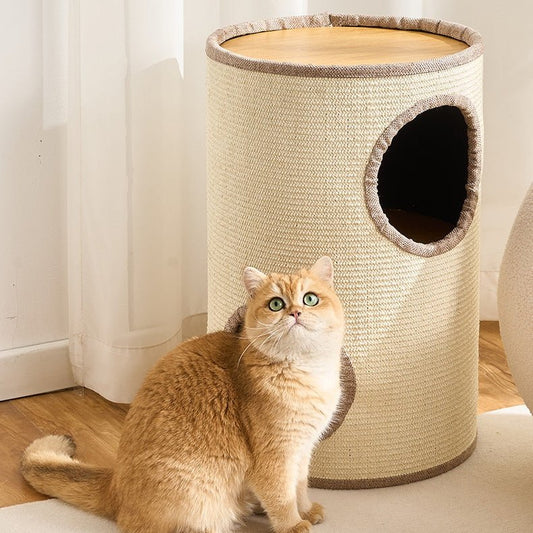
Viele Katzenbäume verwenden Sisal-Seil oder Karton als Kratzmaterialien. Sisal-Seil ist eine fantastische Wahl, weil es langlebig ist und Katzen ermöglicht, sich bequem zu strecken und zu kratzen. Kartonkratzbäume bieten hingegen eine hervorragende Alternative, da sie Katzen anziehen und leicht ausgetauscht werden können.
Strategisch platzierte Kratzbäume
Es ist wichtig, Kratzpfosten auf verschiedenen Ebenen des Katzenbaums zu platzieren, um gesundes Kratzverhalten zu fördern. Suchen Sie nach Katzenbäumen, die Kratzpfosten neben Liegeflächen bieten, um Spiel und Entspannung zu kombinieren.
Nachhaltigkeit und umweltfreundliche Optionen
Da Verbraucher bewusster mit Nachhaltigkeit umgehen, bieten viele Marken jetzt umweltfreundliche Materialien in ihren Katzenbäumen an. Nachhaltige Holzquellen, ungiftige Klebstoffe und recycelbare Stoffe sind großartige Merkmale, auf die Sie achten sollten, wenn Sie eine umweltfreundliche Wahl treffen möchten.
Verstehen der umweltfreundlichen Etiketten
Achten Sie beim Kauf eines Katzenbaums auf Zertifizierungen wie Forest Stewardship Council (FSC) für Holz. Produkte, die als ungiftig und umweltfreundlich gekennzeichnet sind, geben Ihnen ein besseres Gefühl beim Kauf, da Sie wissen, dass Sie eine verantwortungsbewusste Wahl für Ihren pelzigen Freund und den Planeten treffen.
Wartungstipps zur Reinigung von Katzenbäumen
Die Pflege eines sauberen Katzen-Dschungelgyms ist entscheidend für die Gesundheit Ihrer Katze. Regelmäßiges Reinigen hält die Kratzflächen funktionsfähig und hilft, Allergene in Ihrem Zuhause zu reduzieren. Hier sind einige Wartungstipps:
- Staubsaugen: Regelmäßiges Staubsaugen des Katzenbaums entfernt Haare und Schmutz und hilft, das Aussehen und die Hygiene zu erhalten.
- Punktuelle Reinigung: Verwenden Sie tierfreundliche Reiniger für die punktuelle Reinigung von Flecken auf Stoff- oder Holzoberflächen.
- Stabilität prüfen: Überprüfen Sie regelmäßig alle Verbindungen und Stützen, um sicherzustellen, dass der Katzenbaum stabil und sicher für Ihre Haustiere bleibt.
Merkmale, die das Erlebnis des Katzenbaums verbessern
Neben der Materialwahl gibt es mehrere Merkmale, die das Gesamterlebnis eines mehrstufigen Katzenbaums verbessern können:
Interaktive Elemente
Einige Katzenbäume sind mit interaktiven Elementen wie baumelndem Spielzeug oder versteckten Fächern für Leckerlis ausgestattet. Diese Zusätze können Katzen stundenlang unterhalten. Suchen Sie nach Bäumen, die diese Funktionen enthalten, wenn Ihre Katze gerne spielt!
Kombinierte Spiel- und Ruhebereiche
Die Wahl eines Katzenbaums mit Ruhe- und Spielelementen ermöglicht Ihrer Katze, verschiedene Aktivitäten zu unternehmen. Suchen Sie nach Einheiten, die Liegeflächen, Kletterplattformen und Kratzbereiche an einem Ort bieten. Diese Vielfalt hält Ihre Katze stimuliert und stellt gleichzeitig sicher, dass sie einen bequemen Rückzugsort hat, wenn sie sich entspannen muss.
Abschließende Gedanken zur Wahl der richtigen Materialien
Das Verständnis der verschiedenen Materialien, die beim Bau von Katzenbäumen verwendet werden, kann Ihre Kaufentscheidung erheblich beeinflussen. Der beste Katzenbaum für große Katzen, oder jede Größe, sollte Stabilität, Sicherheit und Komfort für Ihren pelzigen Freund priorisieren. Von robustem Holz und bequemem Stoff bis zur Haltbarkeit von Metallstützen ist jeder Aspekt entscheidend für ein positives Erlebnis. Darüber hinaus kann die Berücksichtigung umweltfreundlicher Alternativen Ihr Engagement für ökologische Nachhaltigkeit zeigen, ohne die Qualität zu beeinträchtigen.
Wenn Sie den perfekten mehrstufigen Katzenbaum kaufen, denken Sie daran, dass die Investition in hochwertige Materialien nicht nur der körperlichen Gesundheit Ihrer Katze zugutekommt, sondern auch ihre geistige Anreicherung verbessert. Ein gut gewählter Katzenbaum kann schnell zu einem Lieblingsplatz für Ihr felinen Familienmitglied und zu einer stilvollen Ergänzung Ihres Zuhauses werden. Viel Spaß beim Einkaufen, und mögen Ihre Katzenbaum-Abenteuer voller Freude und Spiel sein!
Glossar
| Begriff | Bedeutung |
|---|---|
| Katzenbaum | Eine mehrstufige Struktur, die für Katzen zum Spielen, Kratzen und Ausruhen entworfen wurde. |
| Massivholz | Strapazierfähiges Holz, das in Katzenbäumen für Stabilität und Langlebigkeit verwendet wird. |
| Holzwerkstoff | Eine Mischung aus Holzpartikeln und Klebstoffen, oft weniger stabil als Massivholz. |
| Kunstfell | Weicher Stoff, der für Komfort auf Katzenbaumoberflächen verwendet wird. |
| Sisal Rope | Strapazierfähiges Material für Kratzbäume, das das natürliche Kratzverhalten fördert. |
| Metallstützen | Stahl- oder Aluminiumkomponenten, die die Stabilität von Kratzbäumen verbessern. |
| Umweltfreundlich | Nachhaltig beschaffte und als ungiftig gekennzeichnete Materialien zum Schutz der Umwelt. |
| Interaktive Elemente | Merkmale wie baumelnde Spielzeuge, die Katzen beim Spielen beschäftigen. |
| Wartung | Regelmäßige Reinigungsverfahren, um Hygiene und Langlebigkeit des Kratzbaums zu gewährleisten. |
Verknüpftes Produkt

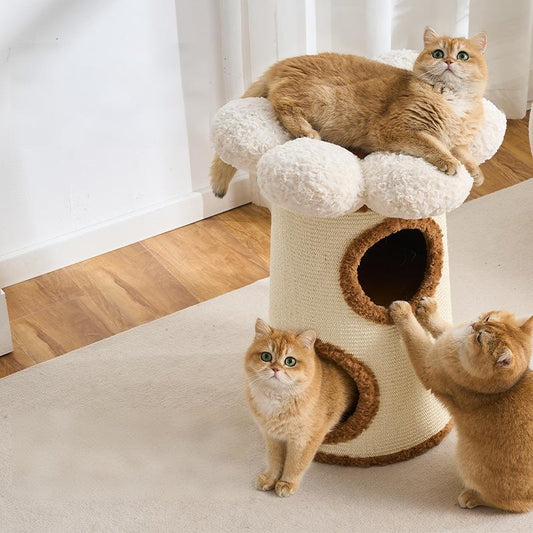
Pilz-Katzenbaum, niedlicher Sisal-Katzenkratzbaum für Katzen
Der Pilz-Katzenbaum besticht durch sein fantasievolles Design, das jedem modernen Wohnraum eine lustige Ästhetik verleiht und gleichzeitig als funktionaler Katzenkratzbaum dient. Sein langlebiger Sisal-Kratzbaum erfüllt die natürlichen Instinkte Ihrer Katze, und die Kletterplattformen auf mehreren Ebenen fördern Bewegung und Erkundung. Mit einer stabilen Basis ist dieser Katzenbaum sowohl für Kätzchen als auch für erwachsene Katzen sicher.
Produkt ansehenHäufig gestellte Fragen
1. Welche Materialien eignen sich am besten für einen Katzenbaum?
Die besten Materialien für einen Katzenbaum sind Massivholz für Stabilität, strapazierfähige Stoffe wie Kunstfell oder hochwertiger Teppich für Komfort und Metallstützen für Festigkeit.
2. Warum ist Holz beim Bau von Katzenbäumen wichtig?
Holz bietet das Rückgrat an Stabilität und Haltbarkeit, wodurch der Katzenbaum mehrere Kletterebenen tragen und dem Gewicht größerer Katzen standhalten kann.
3. Welche Arten von Stoffen sind für Katzenbäume geeignet?
Gängige Stoffe für Katzenbäume sind Kunstfell für Komfort, Teppich für Traktion und Canvas für Haltbarkeit und einfache Reinigung.
4. Wie pflege ich einen Katzenbaum?
Sie können einen Katzenbaum pflegen, indem Sie ihn regelmäßig staubsaugen, um Haare und Schmutz zu entfernen, Flecken mit tierfreundlichen Reinigern punktuell reinigen und Verbindungen und Stützen auf Stabilität überprüfen.
5. Worauf sollte ich bei umweltfreundlichen Katzenbäumen achten?
Achten Sie bei umweltfreundlichen Katzenbäumen auf solche, die aus nachhaltigen Holzquellen, ungiftigen Klebstoffen und recycelbaren Stoffen hergestellt sind, sowie auf Zertifizierungen wie das Forest Stewardship Council (FSC) für Holz.